Exam season
Three exam classes under one roof — KPSEA, KJSEA, KCSE without burning out
Some Kenyan homes are not preparing for “an exam” — they are running Grade 6 KPSEA, Grade 9 KJSEA, and Form 4 KCSE on the same Wi-Fi, same sofa, same exhausted parent.
Last updated: 6 September 2026
Some Kenyan homes are not preparing for “an exam” — they are running Grade 6 KPSEA, Grade 9 KJSEA, and Form 4 KCSE on the same Wi-Fi, same sofa, same exhausted parent.
That is not a morals problem. It is a logistics problem wearing a morals costume. Relatives ask na huyu wa Form 4? while Grade 6 cries over fractions and Grade 9 stares at a scary letter. Dinner becomes a ranking meeting. The charger “belongs” to Form 4 by custom. Burnout arrives for the adult first.
This page is a household operating system: separate jobs for each exam, staggered quiet, no public sibling ranking, and one honest money conversation — not three panic purchases fighting on one M-Pesa balance.
Hero — Kenyan kitchen/dining table with two or three learners’ books open (different grades visible, no school logos); one tired-but-calm parent with phone face-down; warm evening light; serious household logistics energy; studio photography $10k bar; no AI-slop; no chaotic stock “stress family” cliché.
The straight answer
How do you run KPSEA, KJSEA, and KCSE in one home without burnout? Give each exam its own job description, stagger quiet windows, ban public sibling comparison, and replace nightly umesoma with evidence questions. Use one revision stack that includes all three paper sets from KSh 100/month instead of three panic purchases. Protect parent sleep as seriously as candidate sleep. Deep links: Grade 6 composite calm, Grade 9 letter decode, Form 4 dashboard language, and the after-red-ink repair loop. Confirm school/KNEC dates per child — do not invent one shared timetable for all three.
The sitting-room problem nobody prints on a circular
Form 4 needs quiet. Grade 9 needs project follow-ups and written stamina. Grade 6 still needs short, kind sessions — and is easiest to erase because someone in the WhatsApp group said KPSEA is “just monitoring.”
The printer jams. The phone is always charging someone else’s paper. One child wants the table at 5:30. Another needs it at 7. You become unmarked-PDF logistics, night guard, and emotional shock absorber for three different fear cultures at once.
A household OS will not make exams gentle. It will stop the house from fighting itself.
Table of three jobs (pin this)
| Exam class | Core job this season | Parent’s highest-value role | Do not |
|---|---|---|---|
| Grade 6 — KPSEA | Bank clean evidence; respect the widely reported ~20% composite slice without KCPE panic | Diagnostic + short marked sections + sleep | Treat as “nothing” or as league-table war |
| Grade 9 — KJSEA | Finish the large ~60% slice calmly; decode bands; repair weak learning areas | Pathway briefing via school; 7-day recovery if a letter scares you | Invent cut-scores; shame one band into a life verdict |
| Form 4 — KCSE | Tear subject first; marked papers; last-lap weekly OS | Food, calm windows, dashboard questions instead of umesoma | Fake timetable prophecy; volume without marking |
Complementary deep reads — keep them open when the house gets loud:
- KPSEA isn’t just monitoring
- KJSEA Grade 9 parents’ guide
- KJSEA E before you panic
- Stop asking umesoma (KCSE)
- KPSEA Grade 6 revision guide
In-body — handwritten three-job household table on a Kenyan fridge or dining wall (“G6 bank evidence · G9 calm pathways · F4 tear subject”); parent finger pointing at fair quiet windows; studio $10k bar; no AI-slop; no fake MoE circulars.
No sibling comparison — say it out loud
Comparison feels like motivation. In a three-exam house it usually becomes a weapon.
Different years. Different papers. Different nervous systems. A Grade 6 child hearing “why can’t you be like your sister in Form 4?” learns shame, not fractions. A Form 4 hearing “even the Grade 9 is more serious” learns resentment, not Probability.
House rule worth posting where everyone can see it:
We compare a child to their own last fortnight — not to a sibling’s slip.
Praise in private when needed. Correct in private when needed. Public ranking at dinner is optional cruelty — si lazima.
When relatives poke
Have a one-line answer ready: “Different exams, different plans — we don’t rank siblings here.” Then change the topic to food. You do not owe the sitting room a debate.
Stagger table — quiet is a shared resource
You cannot give every child the “best” evening slot every day. You can rotate fairness.
| Window | Example stagger (adapt to your house) | Notes |
|---|---|---|
| Early evening | Form 4 tear subject (fresh brain) | Hardest paper gets first quiet |
| Mid evening | Grade 9 weak learning area / marked section | Keep sessions finite |
| Late-but-not-late | Grade 6 short strand (20–30 min) | Protect bedtime harder for younger |
| Weekend morning | Rotate who gets the long past-paper block | Mark same day — all ages |
| Sunday 5 minutes × 3 | One artifact each child | Same ritual, separate evidence |
If lights-out fights start, the OS is broken — shorten sessions before you shorten sleep.
Evidence habits that travel across ages: is my child really revising and parent progress updates.
Form 4 often needs the freshest brain for the tear subject — basi, and Grade 6 still needs a protected short window. Rotate weekend long blocks so fairness is visible. Quiet is infrastructure, not a favour you award for good behaviour at dinner.
One stack for three paper sets (money without shame)
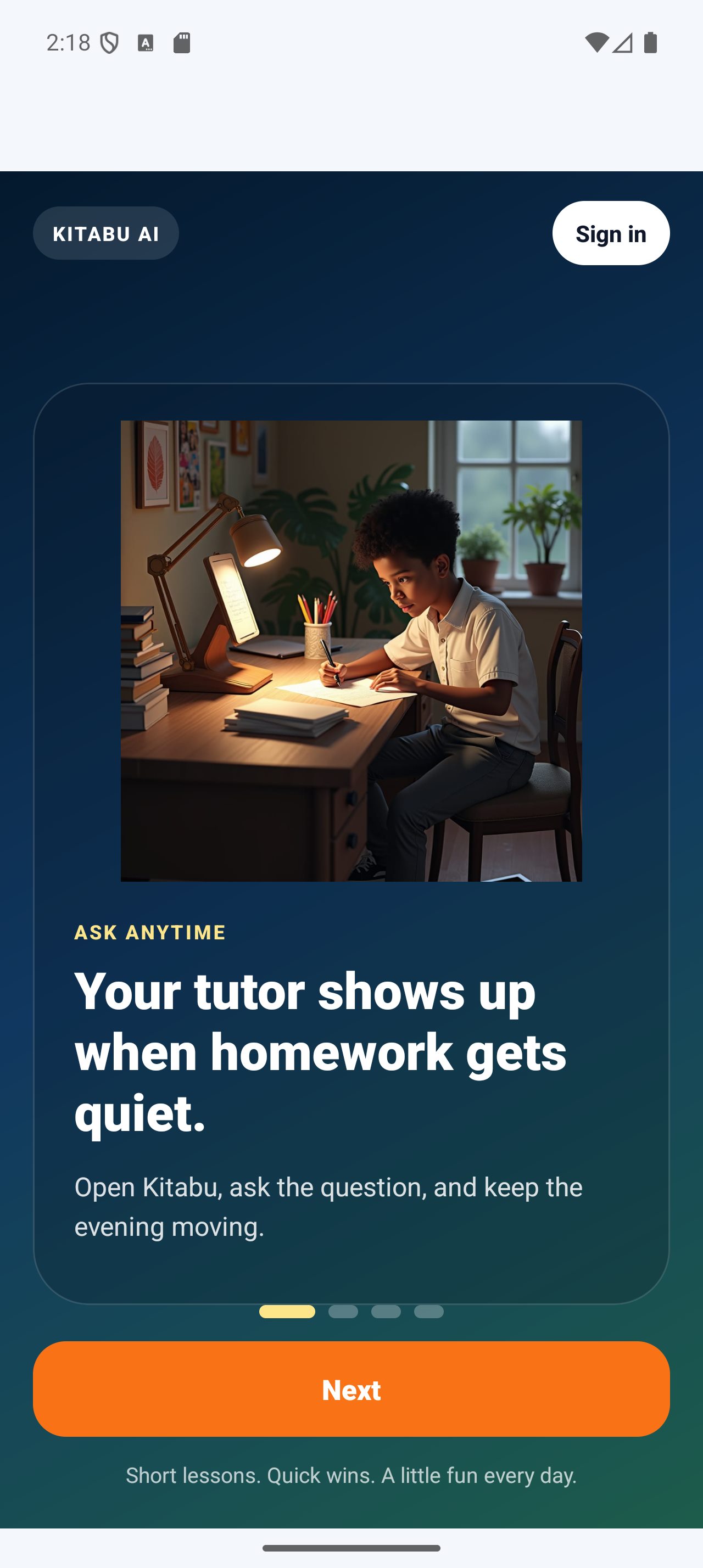
Three exam classes can turn into three shopping sprees: pamphlets, PDFs, “emergency” apps, someone else’s marking scheme printed badly at the cyber. Shame makes people overspend. Clarity saves money.
Product truth, mid-core: Kitabu AI covers Grades 1–12 in English and Kiswahili. Free ≈15-minute diagnostic. Step-by-step help + practice. Parent dashboard + Friday WhatsApp. KPSEA + KJSEA + KCSE past papers included from KSh 100/month — one plan, three paper sets, not three separate panic add-ons.
| Plan | List | Current |
|---|---|---|
| Monthly | KSh 250 | KSh 100 / month |
| Termly | KSh 500 | KSh 250 / term |
| Premium | — | KSh 999 / term |
1-month free trial. M-Pesa. Android live: Play Store. iOS/web coming.
/pricing · /download · /for-parents
Yes — all three exam paper sets are included from KSh 100/month on that plan. That is the household answer when someone asks whether you must buy “KCSE separately.”
You still need school briefings, sleep, and marking discipline. You do not need three product philosophies fighting on one M-Pesa balance. Kitabu does not grade or submit SBA, and it does not pick senior schools — school and official channels own those jobs.
Shared repair loop (different papers, same method)
After any red ink — KPSEA section, KJSEA learning-area practice, or KCSE paper — run the same loop: mark same day, name the mistake, teach-back, retry.
Full method: past papers after the red ink. Younger children need shorter loops; Form 4 needs stricter timing. The logic does not change.
Maths tears at any age often sit below the current chapter — child failing maths. Holidays between peaks: keep skills warm — holiday revision Kenya.
Unmarked PDF stacks create the illusion of revision. A short marked section with a teach-back is the real thing. Collecting papers is stationery. Repairing mistakes is revision.
Parent self-preservation is part of the OS
A burned-out adult becomes a random number generator: kind on Tuesday, volcanic on Wednesday, absent on Thursday because work and fees won.
Protect three adult basics without apology:
- One non-negotiable sleep anchor for you — not only for candidates.
- One hour a week that is not exam admin (church, walk, closed door — your call).
- One trusted school channel per child so you are not living inside five WhatsApp rumours.
You are allowed to say: “I can help with quiet and evidence checks; I cannot re-teach three full syllabuses tonight.” That is honesty, not abandonment.
Refuse three simultaneous mock autopsies at 10 p.m. One calm Sunday ritual beats a nightly courtroom.
Composite and pathway talk without mixing the children
Grade 6 parents need the 20/20/60 composite myth-bust — KPSEA isn’t just monitoring. Grade 9 parents need band decode without invented cut-scores — KJSEA E before you panic. Form 4 parents need dashboard language — stop asking umesoma.
Mixing those conversations into one “you children must all…” speech creates noise. Hold three short briefings, not one confused lecture.
Re-verify composite weights and any placement talk against school/KNEC/MoE materials when decisions loom. This page will not invent ministry wording or pathway thresholds.
When two exams collide on one weekend
Principles, not a fake mega-calendar:
- Form 4 gets the timed paper or tear-subject block when the brain is freshest.
- Grade 6 gets a short keep-warm section — marked same day — not erasure.
- Grade 9 gets pathway/admin calm if the school sent something that needs decoding — then a finite repair session, not overnight panic.
If everything is “urgent,” nothing is. Pick the highest-leverage block for each child and protect sleep for all of them.
A weekly household checklist (quotable)
- Post the three-job table where everyone can see it.
- Assign quiet windows for the week (fair rotation).
- Name each child’s tear subject / weak strand on Monday.
- Require same-day marking for weekend paper work.
- Run Sunday evidence: one artifact each — five minutes each.
- Ban public sibling ranking for the week (renew weekly).
- Check fees/data/M-Pesa once — not every panic evening.
- Protect one adult recovery block.
Power, data, and the printer — boring logistics that save fights
Three exam classes create invisible taxes: data bundles, phone charging politics, printer ink, and the one charger that “belongs” to Form 4 by custom.
Write a tiny logistics list on Sunday:
- Who needs offline PDFs downloaded before Monday?
- Whose phone is the revision device vs the distraction device?
- Where do marked papers live so they are not eaten by the sofa?
- What time does the house go phone-quiet for the early evening tear-subject block?
These are not moral questions. They are infrastructure. Homes that argue about character every night are often arguing about a missing charger.
When one child is “easy” and another is “hard”
Some seasons one sibling looks self-propelled while another needs scaffolding. Resist the story that the easy child is virtuous and the hard child is lazy.
Different subjects tear at different times. The self-propelled Form 4 can still have a silent weak paper. The Grade 6 who needs sit-with-me sessions can still bank excellent evidence with short loops.
Parent energy is finite. Allocate by need and calendar, not by which child performs calmness better at dinner. If maths is the tear for anyone in the house, keep the diagnostic habit — child failing maths — instead of buying personality lectures.
English / Kiswahili peace in a crowded house
Teach-back can happen in the language that unlocks the idea, then bridge to the paper’s demands. In a bilingual sitting room, that flexibility reduces shame.
Do not police a Grade 6 explanation for “sounding too Kiswahili” if the concept finally landed. Do insist on eventually meeting the paper’s language requirements with marked practice. Access first. Paper language second. Umesoma as a purity test helps nobody.
What burnout looks like before the crash
| Early warning | Household fix |
|---|---|
| Every evening ends in tears | Shorten sessions; restore one rest block |
| Only Form 4 gets quiet | Publish the stagger table and keep it |
| Pamphlet pile grows, marks don’t | Diagnostic + same-day marking |
| Parent snaps at minor noise | Adult recovery block is overdue |
| Younger child stops asking for help | Separate praise; protect their window |
Burnout prevention is not soft. It is how you still have a functioning adult in October.
Run the house like a team with three different matches — not like a ranking show.
When you want one calm stack for all three paper sets — Grades 1–12, parent dashboard + Friday WhatsApp, KPSEA/KJSEA/KCSE papers included from KSh 100/month — start the 1-month free trial on Android (Play · ai.kitabu.app).
Or WhatsApp +254 716 175 485 / +254 010 886 5757, or email [email protected].
Free to start · M-Pesa · Cancel anytime · English & Kiswahili · Grades 1–12 · /for-parents · /pricing
Common questions
Can one app really cover KPSEA, KJSEA, and KCSE papers?
On Kitabu, yes — all three paper sets are included from KSh 100/month for Grades 1–12, with dashboard + Friday WhatsApp, Android live, iOS/web coming, M-Pesa, and a 1-month free trial.
Won’t Form 4 always deserve the best slot?
Form 4 often needs the freshest brain for the tear subject — and Grade 6 still needs a protected short window. Rotate weekend long blocks so fairness is visible.
How do we stop comparison jokes from relatives?
Have a one-line house answer ready: “Different exams, different plans — we don’t rank siblings here.” Then change the topic to food.
Is KPSEA still worth energy when KCSE is in the house?
Public explainers still treat Grade 6 as about 20% of a Grade 10 composite picture. Ignoring it to feed Form 4 heat is a false economy — KPSEA isn’t just monitoring.
What if Grade 9 brings home a scary letter?
Decode before panic — KJSEA E before you panic. Do not invent cut-scores at the dinner table.
One phone, three children — how?
Device shifts on the stagger table. Offline downloads before Monday where data is tight. The revision device and the distraction device are not the same job — name which is which.
How much does Kitabu cost for a multi-exam home?
KSh 100/month (list 250), termly 250 (list 500), Premium 999/term, plus a 1-month free trial — /pricing. One stack, three paper sets included from 100. We are not inventing a separate multi-child discount here.
What timetable should we follow?
Each child’s school/KNEC channel. Do not invent one mega-timetable for all three on a blog.
How do parents see progress without three nightly interrogations?
Dashboard + Friday update habits and a Sunday artifact ritual — parent progress updates. One evidence habit beats three umesoma prosecutions.