Revision
Past papers alone won’t save KPSEA/KJSEA/KCSE — what to do after the red ink
Collecting past papers is stationery. Repairing the red ink is revision — and unmarked PDFs will not save KPSEA, KJSEA, or KCSE by sitting in a carton.
Last updated: 6 September 2026
Collecting past papers is stationery. Repairing the red ink is revision — and unmarked PDFs will not save KPSEA, KJSEA, or KCSE by sitting in a carton.
Kenyan exam season has a familiar shopping pattern: download everything, print half of it, highlight titles, feel temporarily safe. The stack grows. The marking scheme stays unopened. The child says tumesoma papers. The parent saw pages. Nobody can name what skill moved.
Red ink is not the enemy. Red ink is the map. The enemy is volume without repair — and shame that makes a child hide the map.
This page is the after-red-ink method: diagnose before the tenth paper, mark the same day, log the mistake, teach it back, retry — then use papers as proof of repair, not as wallpaper.
Hero — marked past paper with red corrections + short handwritten mistake-log notebook on a Kenyan homework table; parent and learner reviewing calmly; warm evening light; studio photography $10k bar; no AI-slop; no fake KNEC watermarks or official-partnership paper photography.
The straight answer
What should you do after a past paper is marked? Run a repair loop: name the mistake, find the strand under it, teach-back the correct method, retry a twin question soon, and only then attempt more volume. Unmarked PDF stacks create the illusion of revision. A short diagnostic before the tenth paper stops you from practising the wrong year of the syllabus. The same loop serves Grade 6, Grade 9, and Form 4 — timing and length change; the logic does not. Kitabu includes KPSEA + KJSEA + KCSE papers from KSh 100/month for Grades 1–12, with dashboard + Friday WhatsApp, Android live, iOS/web coming, M-Pesa, and a 1-month free trial.
This method sits beside, not instead of, exam-specific calm:
- Grade 6 composite frame: KPSEA isn’t just monitoring
- Grade 9 letter decode: KJSEA E before you panic
- Form 4 dashboard language: stop asking umesoma
- Shared roof logistics: three exam classes under one roof
The unmarked PDF problem
Volume theatre looks busy. It feels responsible. It rarely moves marks.
A child rushes ten papers. The same wrong method repeats on every mock. You spent money on pamphlets. The weak strand is still weak. That is not laziness — it is a missing loop.
Spicy-safe honesty belongs here: “We have been collecting papers, not repairing them.” Recklessness does not: “You are useless at exams.” The first opens a loop. The second closes a brain.
Diagnostic before the tenth paper
If the first nine papers all tear on fractions, the tenth paper is not bravery. It is repetition of a wound.
Before you turn papers into a personality test, ask:
- Which strand keeps failing — concept, method, reading of the question, speed, or careless slips?
- Does the gap sit in an earlier grade than the paper’s label?
- Has any session this week included teach-back?
- Are we marking the same day we attempt?
Maths families hit this often; the calm lane is still child failing maths. Language papers have their own version: fluency illusion from re-reading notes without producing a marked paragraph.
A free or short diagnostic is not a delay. It is how you stop paying for the wrong practice. Basi — find the tear first, then feed it papers.
The 7-step after-red-ink loop (checklist)
Use this after every marked section or paper. Keep it on the fridge if you must.
- Attempt under honest conditions — timing appropriate to age; phone out of hand.
- Mark the same day with a real marking scheme or teacher/app feedback — not “we’ll mark on Sunday.”
- Sort errors into types — concept / method / question-reading / speed / careless.
- Log one plain-language mistake line per serious error (see example table below).
- Re-teach or teach-back the corrected method in English or Kiswahili — whichever unlocks it.
- Retry a twin question within 24–48 hours — proof of repair, not vibes.
- Only then add volume — another section or paper aimed at remaining weak strands.
If you skip steps 3–6, you are collecting red ink as decoration.
In-body — fridge or wall checklist titled “After the red ink” with seven short steps handwritten; Kenyan kitchen light; parent-friendly and phone-scannable; studio $10k bar; no AI-slop; no fake school stamps.
Full papers vs sections
Not every evening needs a full paper. Frequent marked sections beat rare unmarked marathons — especially for Grade 6, and often for Grade 9 learning-area repair. Form 4 still needs full-paper stamina closer to the last lap, but only at a volume you can mark and repair the same day.
Marking schemes are not cheating
They are the feedback channel parents forget to buy time for. An unmarked attempt is practice theatre. A marked attempt with a named mistake is a plan.
Parent evidence questions (replace umesoma)
- What did we mark today?
- What mistake type showed up most?
- Can you teach me the corrected step in two minutes?
- When is the twin retry?
Evidence > hours. Same thesis as is my child really revising and parent progress updates. Nightly umesoma? only ever returns “yes.” A mistake log and a Friday update answer a better question.
Mistake-log table (illustrative example only)
The table below is an example pattern for a household notebook or shared note. It is not a real child’s record, not a rank, and not a ministry document.
| Date | Exam set | Topic / item | Error type | One-line lesson | Twin retry done? |
|---|---|---|---|---|---|
| 8 Sep | KPSEA-style maths section | Equivalent fractions | Concept | Rename parts before adding | Yes — 9 Sep |
| 9 Sep | KJSEA-style integrated science | Photosynthesis equation items | Question-reading | Underline what is asked | Yes — 10 Sep |
| 10 Sep | KCSE-style maths | Simultaneous equations | Method | Eliminate one variable cleanly | Scheduled 12 Sep |
| 11 Sep | KCSE English section | Inference item | Concept | Evidence line before option | Yes — 11 Sep |
| 12 Sep | KJSEA maths | Word problem | Careless | Rewrite units; recheck | Pending |
Keep logs short enough that a tired parent will actually maintain them. Three serious lines beat a novel nobody reads.
Short exam-specific notes (same loop, different heat)
KPSEA (Grade 6)
Prefer sections over endless full papers. Bank clean evidence; respect the widely reported composite slice without inventing KCPE panic — KPSEA isn’t just monitoring and the KPSEA Grade 6 revision guide. Sleep is part of the score you are banking.
KJSEA (Grade 9)
Papers and projects both matter in the season; repair learning-area strands without turning one band into a life verdict — KJSEA Grade 9 parents’ guide and KJSEA E before you panic. Do not invent pathway cut-scores from a mistake log. Kitabu does not pick senior schools — ask the school when placement talk starts.
KCSE (Form 4)
Tear subject first. Marking schemes are non-negotiable. Full papers only at a volume you can repair — stop asking umesoma. Confirm timetables with school/KNEC; this method page invents none.
Three classes, one roof
Stagger quiet windows and share one repair culture so Form 4 volume does not erase Grade 6 short loops — three exam classes under one roof.
Where Kitabu fits mid-core (papers included, not as theatre)
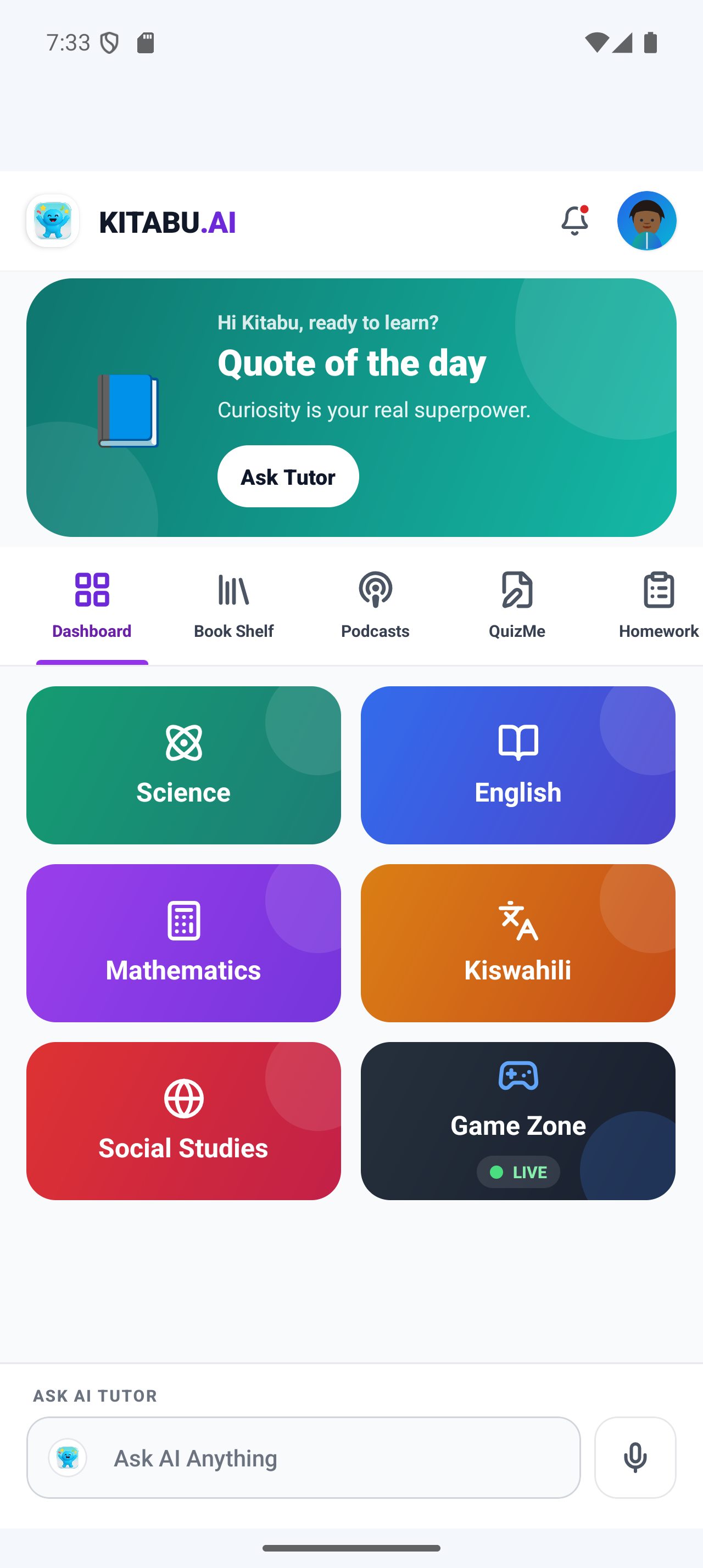
You need papers you can attempt, feedback you can act on, and a parent view of what moved.
Kitabu AI is a CBC-aligned tutor for Grades 1–12, English and Kiswahili. Free ≈15-minute diagnostic. Step-by-step help + practice. Parent dashboard + Friday WhatsApp. KPSEA, KJSEA, and KCSE past papers included from KSh 100/month — so the paper set is not a separate panic purchase after the red ink appears.
| Plan | List | Current |
|---|---|---|
| Monthly | KSh 250 | KSh 100 / month |
| Termly | KSh 500 | KSh 250 / term |
| Premium | — | KSh 999 / term |
1-month free trial. M-Pesa. Android live: Play Store. iOS/web coming.
/pricing · /download · /for-parents
Kitabu does not replace the loop. It makes the loop easier to see: diagnostic → practice → evidence on a Friday update instead of nightly prosecution. Kitabu does not grade or submit SBA.
What past papers cannot do (even perfect ones)
- They cannot replace sleep.
- They cannot invent a ministry cut-score.
- They cannot heal a Grade 4 gap by repeating Grade 6 labels louder.
- They cannot fix a house that ranks siblings at dinner.
- They cannot mark themselves.
Holiday windows: keep the loop warm with shorter sections — holiday revision Kenya. Do not “save all papers for December” like a dragon on a hoard.
Mistakes that waste paper money
Buying every publisher before you know the tear strand. Never marking. Comparing sibling raw scores out loud. Skipping sleep for overnight marathons. Ignoring Kiswahili/language papers because “maths is the problem.” Treating careless and concept errors with the same speech.
Si lazima to own every PDF in Nairobi. Own a loop you will actually run.
Careless vs concept — stop treating them the same
Not every red mark is a “they don’t know it” story.
Careless errors need slowing rituals: underline the ask, rewrite units, estimate before calculating, re-read options after choosing. Concept errors need re-teaching and twin practice. Method errors need worked examples with the steps named out loud. Question-reading errors need annotation habits.
If you punish careless and concept with the same speech, the child learns to fear the paper instead of sorting the error. Sorting is the skill that turns a marked paper into a plan.
Bilingual teach-back is allowed
If the corrected method lands faster in Kiswahili, do the teach-back in Kiswahili first, then bridge into the language the paper demands. This is access, not cheating.
Many Kenyan homes already code-switch mid-sentence; exam season is a bad time to invent a purity rule that blocks understanding. Unlock the idea first. Meet the paper’s language with marked practice second.
When the stack is already huge
If you already own more PDFs than anyone will mark, freeze acquisitions for two weeks. Pick one tear subject. Run the 7-step loop on sections from papers you already have. Throw away or archive unmarked clutter that exists only to create guilt. Guilt is not a study schedule.
A household with KPSEA, KJSEA, and KCSE heat should share this freeze rule so Form 4 shopping does not bury Grade 6’s short loop under new stationery.
A two-week repair sprint (template)
| Day | Focus |
|---|---|
| 1 | Diagnostic on the tear subject / weak learning area |
| 2 | Teach-back + 15 targeted questions |
| 3 | Timed section + same-day mark |
| 4 | Mistake log + twin retries |
| 5 | Second weak strand (do not only feed the ego subject) |
| 6 | Rest block + light review |
| 7 | Sunday evidence ritual (artifact + next week plan) |
| 8–10 | Repeat loop on remaining error types |
| 11 | Longer section or paper only if Days 1–10 were marked |
| 12 | Review careless vs concept ratio with the child |
| 13 | Mixed review; protect sleep |
| 14 | Plan the next fortnight; discard unmarked clutter |
Adapt the length to age. Grade 6 needs shorter sessions. Form 4 can carry more timed work — still only what you will mark. The sprint is a template, not a ministry circular.
Soft signs the loop is working
- The child can point to a mistake type without collapsing into “I’m just bad.”
- Twin retries take less time and lose fewer marks on the same skill.
- Sunday evidence talks get shorter because artifacts already exist.
- The parent asks fewer umesoma questions because the Friday/dashboard trail answers them.
If none of those appear after a fortnight of “papers,” you do not need more papers. You need steps 3–6.
Red ink is information. Use it.
When you are ready to repair — not to hoard — start with a free diagnostic on the repeating mistake, then the 1-month free trial on Android (Play · ai.kitabu.app). Grades 1–12 · parent dashboard + Friday WhatsApp · KPSEA/KJSEA/KCSE past papers included from KSh 100/month · M-Pesa.
Or WhatsApp +254 716 175 485 / +254 010 886 5757, or email [email protected].
Free to start · Cancel anytime · English & Kiswahili · /for-parents · /pricing
Common questions
Are past papers enough for KPSEA / KJSEA / KCSE?
Only after the red ink. Same-day marking, mistake sorting, teach-back, and twin retry beat stacking unmarked PDFs. Papers without a repair loop are stationery with ambition.
How many past papers are enough?
Enough is the number you can mark and repair. For many learners, frequent marked sections beat rare unmarked marathon papers.
Should we mark with the child or alone first?
For younger learners, mark together and keep shame low. For Form 4, a first self-mark with a scheme plus a parent/teacher spot-check often works — then teach-back.
What if the marking scheme confuses us?
Ask the school/subject teacher for clarification on a specific item. Guessing a scheme teaches fiction. Do not invent answers you cannot verify.
Do KPSEA / KJSEA / KCSE need different methods?
Different length and timing; same repair logic. See the short exam-specific notes above and the sibling deep links.
Can one subscription include all three paper sets?
Yes — on Kitabu, KPSEA + KJSEA + KCSE papers are included from KSh 100/month for Grades 1–12, with dashboard + Friday WhatsApp, Android live, iOS/web coming, M-Pesa, and a 1-month free trial.
How much does Kitabu cost?
KSh 100/month (list 250), termly 250 (list 500), Premium 999/term, plus a 1-month free trial — /pricing.
How do I know repair is working?
Twin retries improve; teach-back gets cleaner; the same error type shrinks across a fortnight — not because the stack got taller.
What about three exam classes sharing papers and space?
Stagger quiet; share the loop; no ranking — three exam classes under one roof.